Патологии Захара Прилепина
Posted: December 10, 2012 Filed under: Books, Fiction | Tags: Books, Chechnya, Russian, Zakhar Prilepin Leave a comment
Прочитав Санькю с год назад, не знаю почему, но я так и не взялся ни за один другой роман Прилепина. Все собирался, да откладывал. А вот книжка про Лимонова, р-р-раз и подтолкнула меня к нему.
Очень круто. Прямо оторваться не мог, такой pager turner. Что-то я не осознавал, что должны уже пойти были романы про Чечню, настоящие, перченые, кровоточащие. Чтобы без прикрас и без ненужного action а-ля коммандо дяди Шварца – а такой band of brothers из города-героя Грозного.
Жесткая книжечка, но прочитать стоит. Ой, стоит.
…Оставшееся возле корпусов отделение выстроило восемь чеченцев у стены.
– Спросите у своих, кто хочет? – тихо говорит мне и Хасану Шея, кивая на пленных.
Вызывается человек пять. Чеченцы ни о чём не подозревают, стоят, положа руки на стены. Кажется, что щелчки предохранителей слышны за десятки метров, но, нет, они ничего не слышат.
Шея махнул рукой. Я вздрогнул. Стрельба продолжается секунд сорок. Убиваемые шевелятся, вздрагивают плечами, сгибают-разгибают ноги, будто впали в дурной сон, и вот-вот должны проснуться. Но постепенно движенья становятся всё слабее и ленивей.
Подбежал Плохиш с канистрой, аккуратно облил расстрелянных.
– А вдруг они не… боевики? – спрашивает Скворец у меня за спиной.
Я молчу. Смотрю на дым. И тут в сапогах у расстрелянных начинают взрываться патроны. В сапоги-то мы к ним и не залезли.
Ну вот, и отвечать не надо.
Связавшись с нами по рации, подъехал БТР из заводской комендатуры. На броне – солдатики.
– Парни, шашлычку не хотите? – это, конечно, Гриша сказал.
Лимонов Эммануэля Каррера
Posted: December 8, 2012 Filed under: Books, Non-fiction | Tags: Books, Emmanuel Carrère, Limonov, Russian, Zakhar Prilepin Leave a comment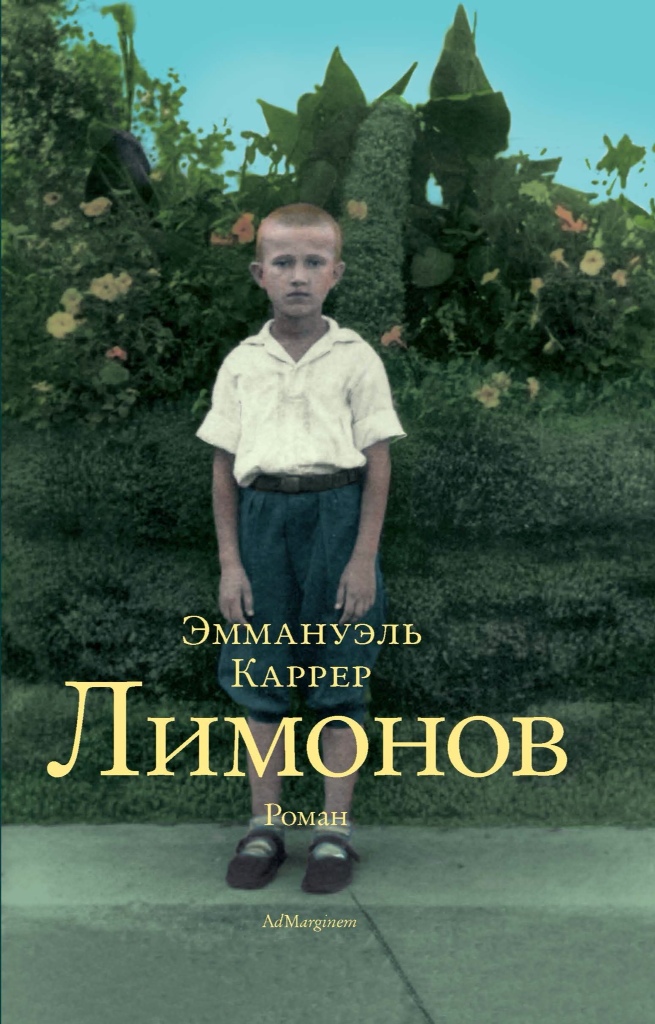
Если одной фразой, то – хорошая книга. А если длиннее… ох.
Во-первых, Лимонов, без сомнения, человек уникальной судьбы, прошедший через такой ворох разнообразных непростых испытаний в своей жизни, что роман о нем – это почище Переса-Реверте и Фандорина будет. Невероятное рядом, вот.
Во-вторых, Лимонов – настолько хороший биограф самого себя, что труд Каррера на 50%, не меньше, свелся к перелопачиванию и пересказыванию десятка-другого романов Эдуарда Вениаминыча, где все-все-все расписано по полочкам. Тут гулял, тут стрелял, тут одна, вторая, третья, девочки мои – а тут сидел, ну-ка. Для тех, кто большинство романов нью-йоркских-парижских-московских-саратовских читал (а на моей полке его книжек десятка три, не меньше, наверное – хорошо пишет, что тут поделаешь – и не читал я, за долгие годы из всего словесного обилия г-на Савенко почему-то только Эдичку – видимо, приберегаю напоследок), повествование Каррера – это-таки короткий summary произведений мировой литературы для 9-го класса, когда action порой так и хлещет, ибо нужно все объяснить и кратко, и емко, и объять необъятное быстро и понятно даже для самого слабого троечника.
В-третьих, и что важно, Каррер не безучастный наблюдатель – у него есть свое, ярко выраженное мнение о великом писателе современности, и оно многогранное весьма. С одной стороны, Лимонов Карреру нравится, и он ему, даже не скрывая того порой, в чем-то завидует. Все-таки, человек удивительной судьбы, Эдичка – и Каррер методично вплетает в рассказ параллели и переплетения судьбы Лимонова с собственной. Но с другой – Каррер не снисходителен даже, а скорее опечален за своего героя – ибо время идет, а героизм поутихает. Все стареют, что ж тут взять.
Ну и конечно, занимательная вставочка, так сказать – сравнение, которое Каррер делает между ЭВ и ВВ. Есть о чем подумать.
В целом, повторюсь. Хорошая книжечка. Вот если бы к ней еще update Каррер через пару лет выпустил, на фоне стенаний Эдички, что у него “украли революцию на Площади Революции”, я бы немедля купил бы этот extended edition with new previously unreleased tracks. Вот.
P.S. Ну и конечно – а вы знали, что Пол Хлебников был двоюродным братом Каррера? То-то.
Встаю, благодарю за кофе и за то, что он уделил мне время, и когда уже выхожу за порог, он задает мне один-единственный вопрос: – А все-таки странно. Почему вы решили написать обо мне книгу? Он застал меня врасплох, но я стараюсь ответить как можно искреннее: потому что у него – или у него была, я уже не помню, как я выразился, – потрясающе интересная жизнь: романтичная, полная опасностей, тесно перемешанная с шумными историческими событиями. И тут он произносит фразу, которая меня потрясает. С сухим смешком, глядя в сторону: – Дерьмовая была жизнь, вот так.
Tenderness in Hell by Vytautas Pliura
Posted: December 4, 2012 Filed under: Books, Poetry | Tags: Books, English, Linor Goralik, Poetry, Stanislav Lvovsky, Vytautas Pliura 3 Comments
Passing by my bookshelf, I noticed 4 different copies of Vytautas Pliura's only published book, Tenderness in Hell, including the original 2001 edition which I bought used for over $100 together with the author's letter to a prospective publisher, two copies of the 2009 re-edition (bought five, I think, when they got out – and gave some away already) – plus a 2003 brilliant Russian translation by Linor Goralik and Stanislav Lvovsky, a 500 copies only edition, also a rarity. In pre-kindle times, there was a reason to stock up on Pliura's books – they were hard, impossible to get.
Haven't opened them for 3 years at least – and a quick thought blinked through my mind – Vytautas is dead. Struck by the thought, I rushed to google it and indeed, March 30, 2011, a year and a half ago almost, one of my absolutely favorite poets, if not the favorite, dead.
So in much belated memoriam, here goes his poem that I love so much. Rest in peace, Vytautas.
Tenderness in Hell
When my father spoke in his sleep
Often he would speak in German
Frightening us kids
We didn't speak German in our home
We hardly ever spoke Lithuanian for that matter
We were American
We spoke English
I learned English from my mother
As a little boy I remember my father speaking in broken English
“Throw me down the stairs the towel!” he said to me
one morning after his shower
I laughed thinking it was funny
When he spoke in German in his sleep
We kids knew he was dreaming that he was in the
concentration camp again
My mother
Would talk to him in a soothing way like a turtle dove
Telling him that he was at home
In our big Victorian house on the edge of the town
cornfields coming up to our swing sets
That he was safe
That no one would hurt him
She would speak in broken Lithuanian to hide this from us kids
But we knew anyway
When I picked up the phone one day
when Daddy's car had broke down
He told me he was calling from the “YUM-KAH!” hotel
I had no idea what he meant
Later my mother figured out that he was at the YMCA
When Daddy spoke in German in his sleep
We kids sensed something terrible
Something dreadful
German was so harsh
Not like Lithuanian which was soft as rose petals
He would cry in his sleep
One of his jobs in the camp
Was to take dead babies from their mothers
He was in charge of sanitation
Dead babies could spread disease
He would speak in German
Pleading with the woman to give up her baby
Being a medical student from Heidelberg and a prisoner himself
That was his job
Often women would nurse their dead babies, holding them up
to their breast, to fool Daddy
I pieced this all together years later
After my uncle told me about the camps and how he would outwit
the guards at the prison dairy by spreading the soft butter on
his chest and smuggling it out under his shirt
That's why Daddy didn't starve in the camp
Daddy never spoke of his time in the camp
He never breathed a word
At least not when he was awake
Only
When he was dreaming
The Hive by Charles Burns
Posted: November 25, 2012 Filed under: Books, Comic | Tags: Books, Charles Burns, English, Tintin on drugs 1 Comment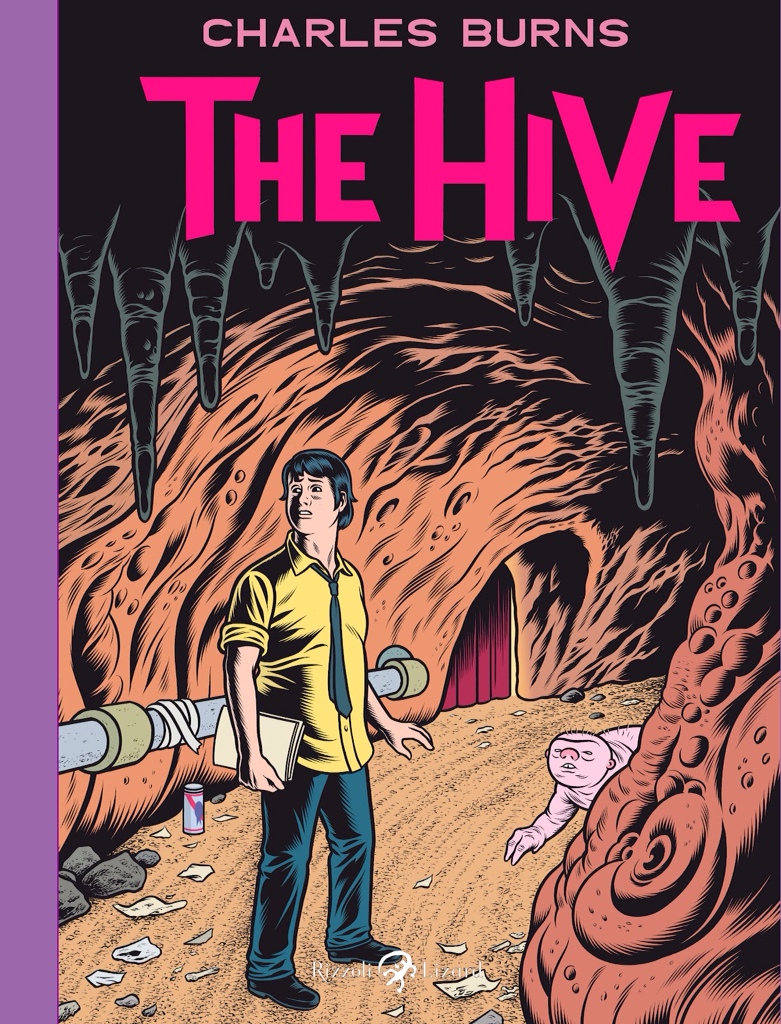
The Hive is a dark and disturbing continuation of X'ed Out, recently published part 2 of Charles Burns' new trilogy definitely inspired by Hergé's Tintin – but with a Naked Lunch twist.
Given it's a very complex multilayer story (part 1 made no sense on its own, part 2 now start to form patterns of sense), I was left with no option but to re-read X'ed Out again – just to remember what it was about. Timelines cross – reality, imagination, hallucinations, present and past, all intersect and collide – and oh boy, now both X'ed Out and The Hive have become a thrilling read.
My problem – by the time part 3, called Sugar Skull, hits the shelves, I will have forgotten X'ed Out and The Hive entirely, and will have to re-read both again. It looks like a marketing scam, I would say, splitting a 300 page graphic novel into 3 thin installments to sell 3 books $20 a piece and not just one for $25. Oh well, I like it so much now that I couldn't care less. Finally, a great follow up to Burns's renowned Black Hole, well overdue.


All You Zombies by Robert Heinlein
Posted: November 5, 2012 Filed under: Books, Fiction | Tags: Books, English, Robert Heinlein, Science Fiction, Zombie 1 Comment
Ages since I read any science fiction stuff. Came upon this short story while wiki'ing Heinlein upon re-watching Starship Troopers recently. Plus, I guess it also popped up on some libertarian wires that flood my facebook feed.
After all, what's $1.25 paid to amazon for a story about a man who realized he is both his own father and his own mother? Well, go figure.
Bambi vs. Godzilla: On the Nature, Purpose, and Practice of the Movie Business by David Mamet
Posted: November 5, 2012 Filed under: Books, Non-fiction | Tags: Books, David Mamet, Filmmaking 3 Comments
Mamet's non-fiction book on the movie business is one big piece of sheer cynicism – and intellectual superiority. Be prepared. A true cinema buff like myself, I was humbled by the vast amount of names and movies I have missed entirely or haven't seen at best. And many things I didn't know – well, I don't know some of them still.
The book is smart, but it ain't an easy ride. When you have every line as a punch line, I tend to miss a few punches. Like some say, your brain is a muscle, and here you are forced to train it.
The most interesting part – the section on Genre. You can read all the Cinema Scope, Sight & Sound, Искусство Кино, etc etc – but this bit is obligatory reading for all the movie zombies like me. You could've skipped War and Piece at school (like I did, miraculously), but you mustn't miss this.
If the shark makes us say “ooh”, it has earned our few dollars. If the filmmaker can make us say “ooh” of a shot of the empty water, give him his private plane.
The observed rule in Hollywood is: “Feel free to treat everyone like scum, for if the desire something from you, they'll just have to put up with it, and should they rise to wealth and power, any past civility shown towards them will either be forgotten or remembered as some aberrant and contemptible display of weakness.”
Why I Left Goldman Sachs by Greg Smith
Posted: November 2, 2012 Filed under: Books, Non-fiction | Tags: Books, English, Goldman Sachs, Greg Smith, Investment Banking Leave a comment
Not a mind blowing book for sure, but maybe a worthwhile, I dunno, bathroom read or something. A few observations, though.
A, the book is 11 chapters long, and the first 10 is all [in high pitched voice] “I love you, Goldman Sachs, I love you”, over and over again. Agree with dealbreaker, sometimes it seemed as if he wanted the firm to turn to him and say “I'm so sorry, Greg, old buddy”, hug him and then elect him partner or CEO or something.
B, most of it is written with an attitude as if he had not outgrown his junior banker excitement – strange to hear it from an overdue VP/ED who worked 11 years in the industry – and especially on GS trading floor, for Christ's sake – would be more acceptable for an analyst or associate to still trumpet all those “wow's” sooo loud and clear. Looks to me GS never promoted the guy for a reason.
C, chapter 11, “the muppets” chapter (the word itself used less than a dozen times), is way too idealistic for my taste. Maybe I am far too cynical (indeed), but why would you run your firm over in the press like that and bury your career along with it? I don't want to, but I kinda buy into Goldman's case that there are two versions to this tale.
Overall, a quick read – not anywhere as good and exciting as The Accidental Investment Banker, but it has its laughs. Roger out.
NurtureShock: New Thinking About Children by Po Bronson and Ashley Merryman
Posted: October 18, 2012 Filed under: Books, Non-fiction | Tags: Ashley Merryman, Books, English, Po Bronson, Psychology Leave a comment
Hard for me to say it, but it's been a while since I tried any psychology book at all, leave alone a child / teen psychology one. All I have to say – a gripping read. First time ever I have a book like this on the beach and don't want to go into the water until the end of the chapter.
Leaves far too many questions open for me, but still – gives extremely valuable advice and sets mind to work on how to bring a child better. Sad I haven't got my hands upon it earlier, say, a year ago or so – actually, it was my wife who found it and put me on course – we would've done a few things differently, I guess.
Set with a purpose of understanding on how to improve parenting experience and get better results in upbringing, the authors do little but summarize in plain “christian” words tons of different research on how to praise a child, stimulate speech development, instill fairness, resolve sibling conflict, teach a child how not to lie etc etc. For me personally, it was a much more useful read than, say, Kindergarten is Too Late – a great book as well, but it gives only concepts that you have to apply in an inexplicable way – but here, some tools as well. Good read.
The Cryptogram by David Mamet
Posted: October 16, 2012 Filed under: Books, Theater / Drama | Tags: Books, David Mamet, English, Theater Leave a comment
Can't say I truly understood what this book was about. I didn't read it as child's coming of age or betrayal related to family breakup, as some reviews claimed.
It seems I am falling out of grace with Mamet – second play in a row that I don't like much. Frankly, Keep Your Pantheon one was funnier and easier to dig.
I reckon I should stop reading his drama and start hitting the theater more often – sad no Mamet available in Moscow though.
Or audio books. Downloaded Speed the Plow for Kindle – will see how it goes.
P.S. Am reading Bambi vs. Godzilla in parallel – also, not an easy read, though it's non-fiction – but it has it's moments, I guess.
Louis Riel: A Comic-Strip Biography by Chester Brown
Posted: October 8, 2012 Filed under: Books, Comic, Documentary | Tags: Books, Chester Brown, English 1 Comment
Imagine a comic book on the story of Stepan Razin or, I dunno, the Decabrist movement. This is what this Louis Riel comic bio is – a story of a renowned Canadian freedom fighter, statesman and politician, hanged by the neck at the end.
Chester Brown has always claimed it to be his masterwork – maybe so indeed, but I prefer his autobio books like Paying For It much more.
Truth be told, Brown must’ve studied quite a few books on Riel – as it shows him with all the weaknesses and controversies. Ah, whatever – not the worst 1.5hr read I’ve had in my life.
 nomiresdebajodelacama