Journalism by Joe Sacco
Posted: August 9, 2013 Filed under: Books, Comic, Documentary, Non-fiction | Tags: Books, Chechnya, English, Joe Sacco Leave a comment
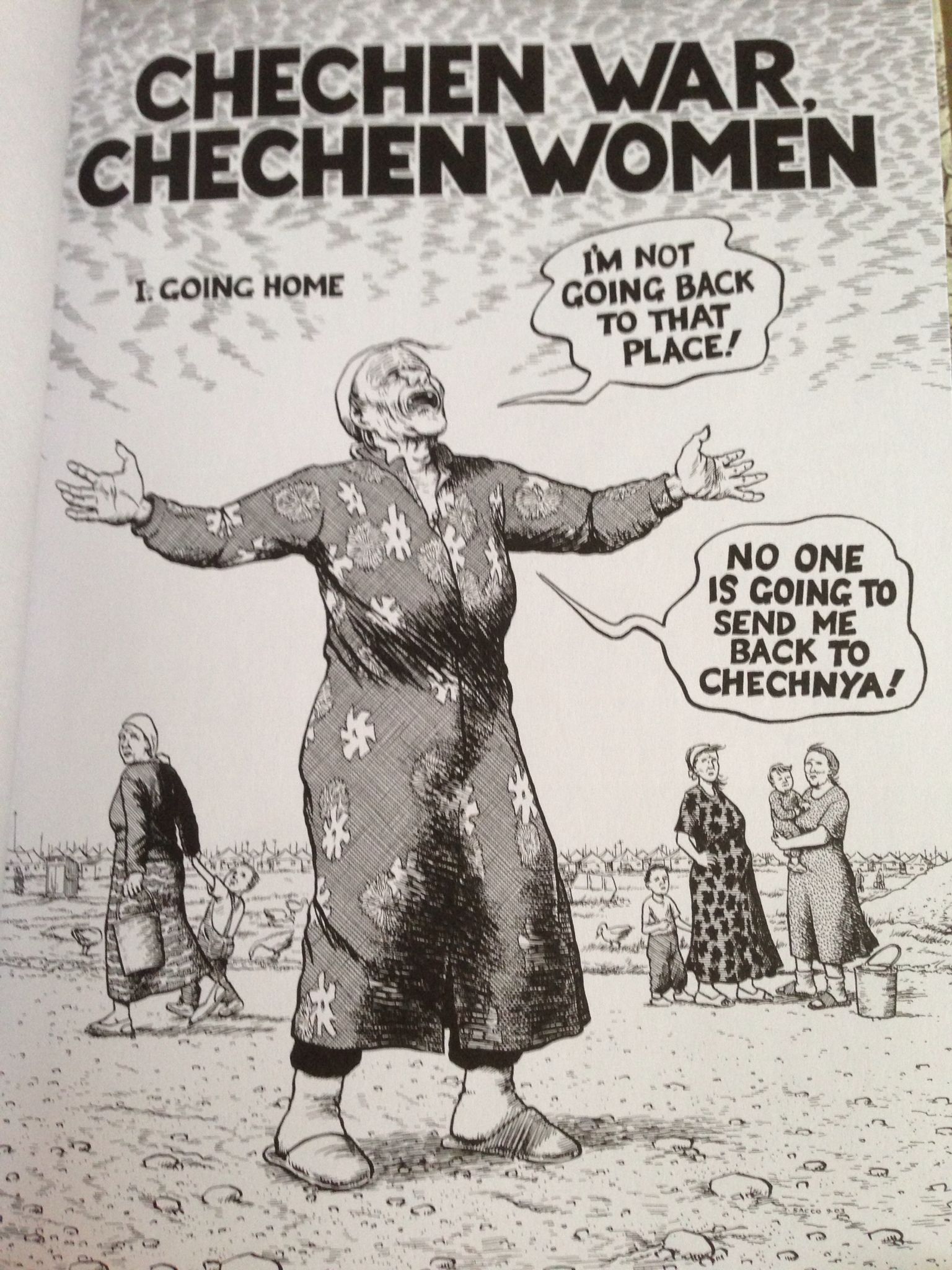
Quite an interesting collection of various short stories by the great Joe Sacco, covering his multiple trips to war and poverty ridden destinations in Palestine, Iraq, Chechnya, India, as well as illegal immigration camps in Malta.
Over the past two decades Sacco seems to have become the only (or definitely the most well-known) comic journalist in the proper journalism sense of the word. He goes to locations, meets poor disadvantaged refugees, and makes photos which he then subsequently turns into cartoons.
Yes, indeed, he tends to look at things from a true socialist (well, liberal) point of view – and not because he doesn't like Ayn Rand – but because he just wants the Indian seven-year-olds fed and the Iraqi wounded treated.
This book, as great as it is, for a true Sacco fan certainly lags behind Safe Area Goražde, a gripping blood-chilling tale of the massacre of Eastern Bosnian muslims by the joint Serb forces – but it has its up points. The lazy of me read it in a few attempts, with Iraq being the stalling point of my journey – but it is definitely worth a try.


Ритейл от первого лица. Как я строил бизнес Apple в России Евгения Бутмана
Posted: February 7, 2013 Filed under: Books, Documentary, Non-fiction | Tags: Apple, Books, Evgeny Butman, Russian Leave a comment
Ключевой вопрос в этой книжке – она настолько от первого лица, что явно виден один факт – слишком многое оставлено за кадром.
Удивляет, например, что прочие акционеры re: Store – ну, такое ощущение, что их не было вовсе. Первый раз вскользь упоминаются на 93% книги (по расчетам kindle) – так, мимоходом, без имен. И слишком многое в повествовании идет именно так, от первого лица – как будто вторых и нет.
Читать занимательно, читается ну очень быстро – но познавательно ли? Хотя, признаюсь, ЕБ обманул мои ожидания в лучшую сторону. Я, честно, думал, кажется, в 2006 или 2007 г., уж не упомню, что Apple закрутит гайки раньше – и не даст товарищам так развернуться. И франшизу IMC отнимет раньше. Ан-нет.
Тюрьма и воля Михаила Ходорковского и Натальи Геворкян
Posted: December 27, 2012 Filed under: Books, Documentary, Non-fiction | Tags: Books, Mikhail Khodorkovsky, Natalia Gevorkyan, Natan Dubovitsky, Russian Leave a comment
На удивление, МБХ оказался очень ничего автором. Человек с рублем образца 1992 года я не читал (думаю, не попробовать ли?), Левый поворот был произведением газетным и программным – а тут, глядя, как он чередует главы с Геворкян, понимаешь – а МБХ ее переигрывает, вот.
Много интересного почерпнул из книжки, реально. Ибо что-то из славной истории МБХ и Менатеповской доразгромной как-то мимо меня прошло. А разгром – ну, разгром. С ним все понятно как раз.
Самое интересное, imho – даже не авантюристские комсомольские 80-е и не буйные малиновопиджачные 90-е, не Сурков в Менатепе, нет. Самое интересное – это тюремные хроники. Ну как-то так.
Тюрьма является как бы увеличительным стеклом для наблюдения за общественными процессами.
Когда в стране резко снижался уровень жизни, то через некоторое время в тюрьме питались травой в буквальном смысле этого слова. Последний раз, по рассказам, такое случалось в 1999–2000 годах. Счет дистрофикам, как рассказывают, шел на десятки и сотни.
Я этого, к счастью, не застал, но был поражен наличием полностью безграмотных молодых людей. То есть вообще не умеющих в свои 20 с хвостиком лет ни читать, ни писать.
Я был свидетелем смены «контингента» в Матросской Тишине, когда на место маньяков и уличных преступников в массовом порядке стали поступать люди, у которых рейдеры в погонах отнимали собственность.
Я наблюдал, как, отдав собственность, они выходили со сроками и без.
Я видел, как в тюрьму пошли правоохранители и их подручные из числа «коммерсантов», пострадавшие в ходе междоусобных войн ведомств, как с недоверием восприняли медведевские инициативы и как стали спустя некоторое время благодаря им выходить на свободу, возвращать свое добро. Пусть пока частично.
Нет, в тюрьме, несмотря на все ограничения, многое хорошо заметно из того, что происходит на воле.
Человек в тюрьме, несомненно, меняется. Тюрьма сходна с инвалидностью, когда одни, неработающие, системы восприятия восполняются обострением других. Взамен сократившемуся количеству внешних раздражителей приходит большая чувствительность к остающимся.
Те, кто долго находится в тюрьме, любят смотреть мультфильмы, острее реагируют на события во внешнем мире, гораздо тоньше ощущают окружающих. Выходившие после долгой отсидки на волю рассказывают, что первые несколько месяцев читают людей как открытую книгу. Потом «сверхвосприимчивость» проходит.
Несомненно, тюрьма меняет и этические нормы. Особенно в молодых, не устоявшихся головах. Если на свободе 95 % людей в обычной жизни вранье считают чем-то не очень хорошим, а жестокость не относят к норме, то в тюрьме все не так.
Врать нельзя «своим», красть нельзя у «своих». Жестокость — норма. Причем такие правила навязываются не только (а может, и не столько) преступным сообществом. Это правила, по которым живут «сотрудничающие с администрацией» и сама «администрация». «Зона» — большая деревня. Здесь все, всё и про всех знают. Да никто особо ничего и не скрывает: «опера» всех «разводят» и подставляют, все и всё воруют, в ШИЗО бьют (впрочем, не только в ШИЗО), услуги покупают и т. д. Может, только торговля наркотиками идет сравнительно негласно. Хотя и про наркотики в общем все известно. Я лично, например, только в «зоне» увидел гашиш в брусках, «пятаки», «химки», марихуану, которую в сезон курили почти все. Странный, сладковатый дымок. Очень характерный…
Вообще-то смешно. Приехав в «зону», я сначала не мог понять: люди ведут себя как пьяные, а запаха нет. Потом понял…
Слон на танцполе Евгения Карасюка
Posted: December 22, 2012 Filed under: Books, Documentary, Non-fiction | Tags: Books, Evgeny Karasyuk, Russian, Sberbank Leave a comment
Неплохая книжечка. Евгений Карасюк из Forbes, надо признаться, довольно хорошо освоил жанр бизнес-романа, столь популярный в стране, чьим гражданам почему-то хотят отказать в праве усыновлять российских сирот. А при учете, что добрая половина из действующих лиц сей саги мне знакома в большей или меньшей степени, для меня ее читать было интересно вдвойне (хотя, признаюсь, и про Enron, и про Lehman, и про MS, и про Goldman читать было тоже весьма интересно).
Отметить хочу следующее. Во-первых, хоть что-то и приукрашено, не без этого – в целом выглядит весьма правдоподобно. А во-вторых, хоть я и решил, что факты и их интерпретации в этой истории я комментировать не буду – тем не менее, ясно, что всё только начинается. Банку еще есть над чем поработать – как мне кажется, в ритейле и IT прежде всего.
Евгений, так когда ждать сиквела?
P.S. Ну а для тех, кто, как и я, полюбил читать с киндлов и иже с ними девайсов – господа, долой пиратство, лицензионная книга стоит каких-то там 299 руб. на прекрасном сайте www.litres.ru – и заплатить можно баллами Сбербанк спасибо! Вот.
Louis Riel: A Comic-Strip Biography by Chester Brown
Posted: October 8, 2012 Filed under: Books, Comic, Documentary | Tags: Books, Chester Brown, English 1 Comment
Imagine a comic book on the story of Stepan Razin or, I dunno, the Decabrist movement. This is what this Louis Riel comic bio is – a story of a renowned Canadian freedom fighter, statesman and politician, hanged by the neck at the end.
Chester Brown has always claimed it to be his masterwork – maybe so indeed, but I prefer his autobio books like Paying For It much more.
Truth be told, Brown must’ve studied quite a few books on Riel – as it shows him with all the weaknesses and controversies. Ah, whatever – not the worst 1.5hr read I’ve had in my life.
Tough Sh*t: Life Advice from a Fat, Lazy Slob Who Did Good by Kevin Smith
Posted: July 17, 2012 Filed under: Books, Documentary, Non-fiction | Tags: Books, English, Filmmaking, Kevin Smith Leave a comment
Smith is one funny bastard, that I have to agree. The guy who brought Clerks less than 20 years ago on an unbelievable $27k budget, having passed through the guts and glory of show biz, he still hasn't lost it. Well, hasn't lost it entirely, at least.
The book is about him – well, who else? Childhood in NJ, convenience store clerk job, Clerks, Sundance, Harvey Weinstein, bigger budgets, go-go-go.
Key highlights of the book – Kev's way into the movies, Bruce Willis who turned out to be a total primadonna jerk (reading Cop Out shooting notes was fun fun fun), and Kev's true story about Too Fat To Fly incident.
While going through the book I realized I had missed Smith's last movie, a messy action thriller called Red State – watched it immediately, gripping stuff. Smith claims Quentin loved it. I'm not surprised.
To finish, a small piece of wisdom from our one and only Silent Bob
People need to be regularly reminded that they began as cum. Not to diminish or cut 'em down to size – quite the contrary: I tell people they were cum once as a gesture of my awe at their very existence and to pat 'em on the back. There are no losers in life because every one of us who is born is a huge fucking winner.
Whenever someone tells me I'm fat, I tell 'em I wasn't always: Apparently, at one point in my life, I was fit enough to out-swim a legion of sperm. And now, like any past-their-prime athlete, I'm enjoying the good life: I hoisted my Cup already, so at this point, fuck off and lemme enjoy bacon and brownies (maybe even together).
Fooling Some of the People All of the Time by David Einhorn
Posted: July 4, 2012 Filed under: Books, Documentary, Non-fiction | Tags: Books, David Einhorn, English 1 Comment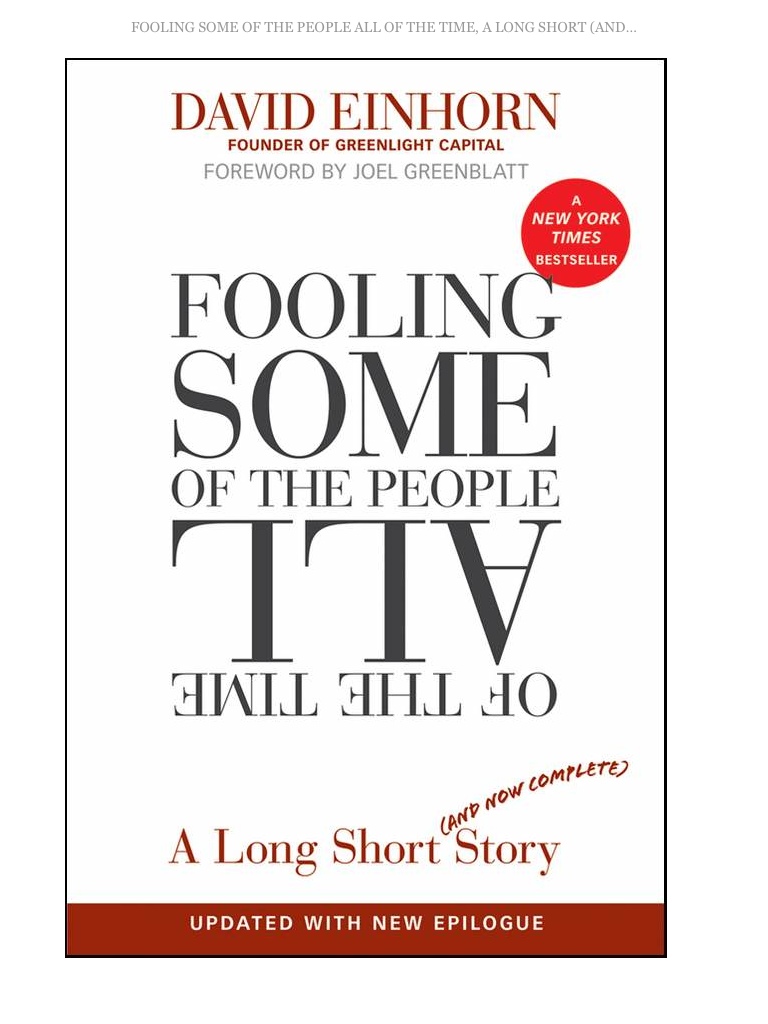
I came by David Einhorn's Don Quijotean saga of a 6-year long fight by pure chance.
All I knew was that Einhorn was a hedge fund manager for Greenlight Capital, a prominent short-seller and critic of Lehman a year prior to their demise.
As usual, I didn't read the description when I bought the book – so I was quite surprised to find out that it was not about Einhorn shorting subprime bonds in late 2000s (which apparently he never did), but about his 2002 short position in a midcap public PE and SME lending outfit called Allied Capital. Now, who the F are Allied Capital and why read 400 pages about them?
Turned out, it didn't matter that much. Allied was the villain, or so it seems – but the book is not about that at all. Or not only about that. The book is about extreme example of acute shareholder activism – and from a guy who shorted the stock! Our very own enfant terrible Alexey Navalny should envy the level of detail, attention, investigation efforts and time invested in this position. I seriously doubt most fund managers do anything close to that kind of thing – the guy is simply amazing.
Greenlight's fight against Allied started from an investment idea speech (quite an interesting and funny one!) at a charity investor conference. Essentially, Einhorn claimed a company misstated accounts. As a result, he endured a 6-year long libeling campaign by Allied and a number of government authority investigations only to prove he was right in the first place! He even had his phone records stolen by his corporate adversary – not in Russia, no Nemtsovgate – in the US! I am struggling to remember whether I heard about Navalny in 2006. 6 years is a lot!
On the reading side, the narrative gets boring from time to time as Einhorn is extremely methodical in putting all arguments in an exhaustive fashion, never missing a beat. Not a single shady disclosure on page 87 of the appendix to the quarterly report is missed. Basic accounting knowledge required, huh.
Still, a great find and a great read. Proves 2 things: (a) governments are malfunctioning everywhere, and (b) talent won't suffice, you need persitance. True indeed.
More on Einhorn's website: http://foolingsomepeople.com/
The Byrne performance reminded me of something Warren Buffet once told me about the difficulty of shorting the stocks of companies run by crooks, because they'll fight dirty to save themselves. “The crook's life depends on it,” – Buffet said.
Arguably, the biggest difference between Allied and Bernie Madoff's Ponzi scheme is that Allied went through the motions of actually investing the customer money while Madoff didn't even bother.
Are You My Mother? A Comic Drama by Alison Bechdel
Posted: June 25, 2012 Filed under: Books, Comic, Documentary | Tags: Alison Bechdel, Books, Donald Winnicott, English, Virginia Woolf 1 Comment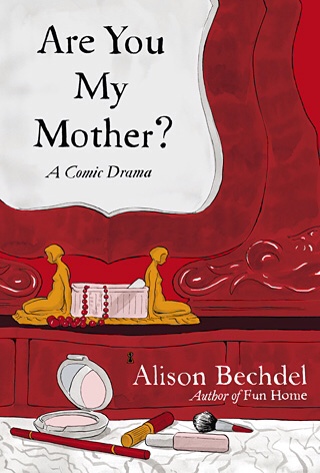
Alison Bechdel just had a new autobio comic book out, a follow up to her immensely successful Fun Home: A Family Tragicomic masterpiece, probably one of a dozen most critically acclaimed comic books of all time.
Fun Home, which I read around 3 or 4 years ago (and loved it!), revolves above Bechdel’s realization that she is a lesbian, her subsequent and dificult coming out, especially to her family, her slow understanding that her father is also gay – and different events in her life leading to her father’s suicide – all seen through the prism of a number of major literary works. At least, that’s the way I remember it – and I tend to forget things easily.
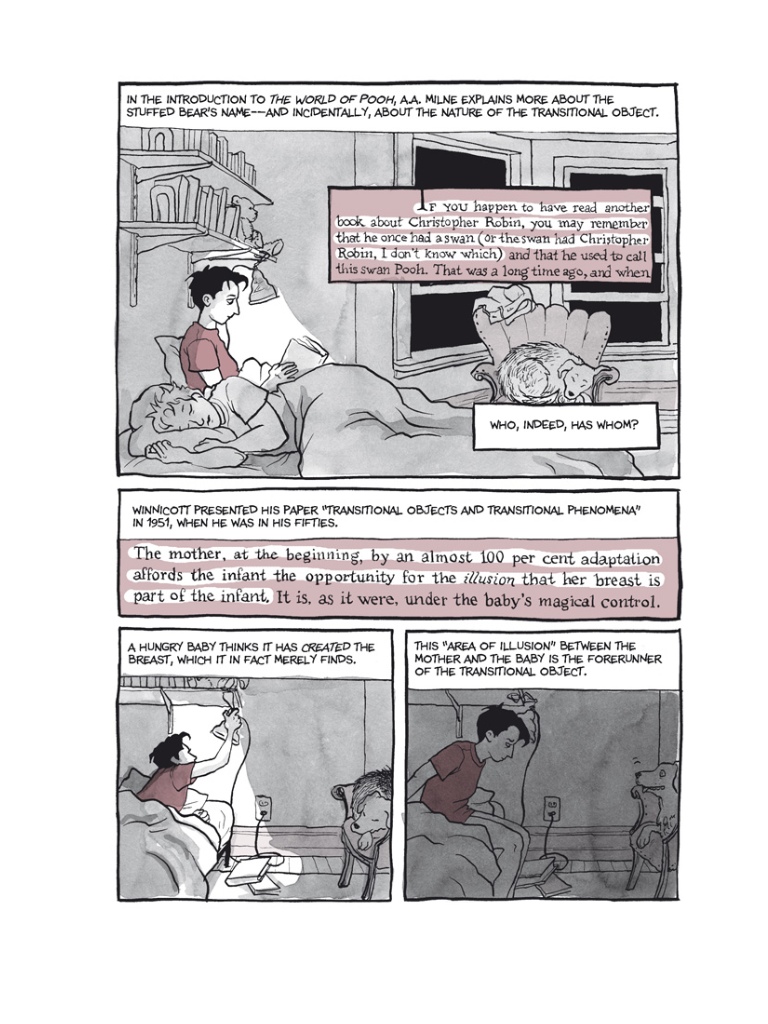
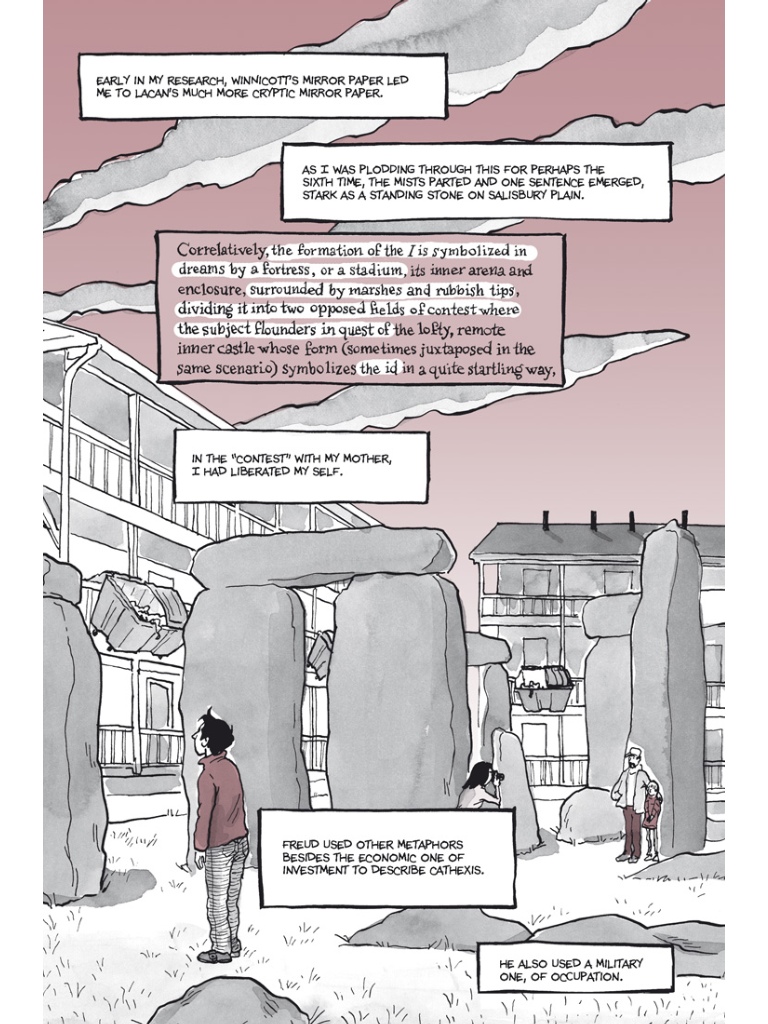
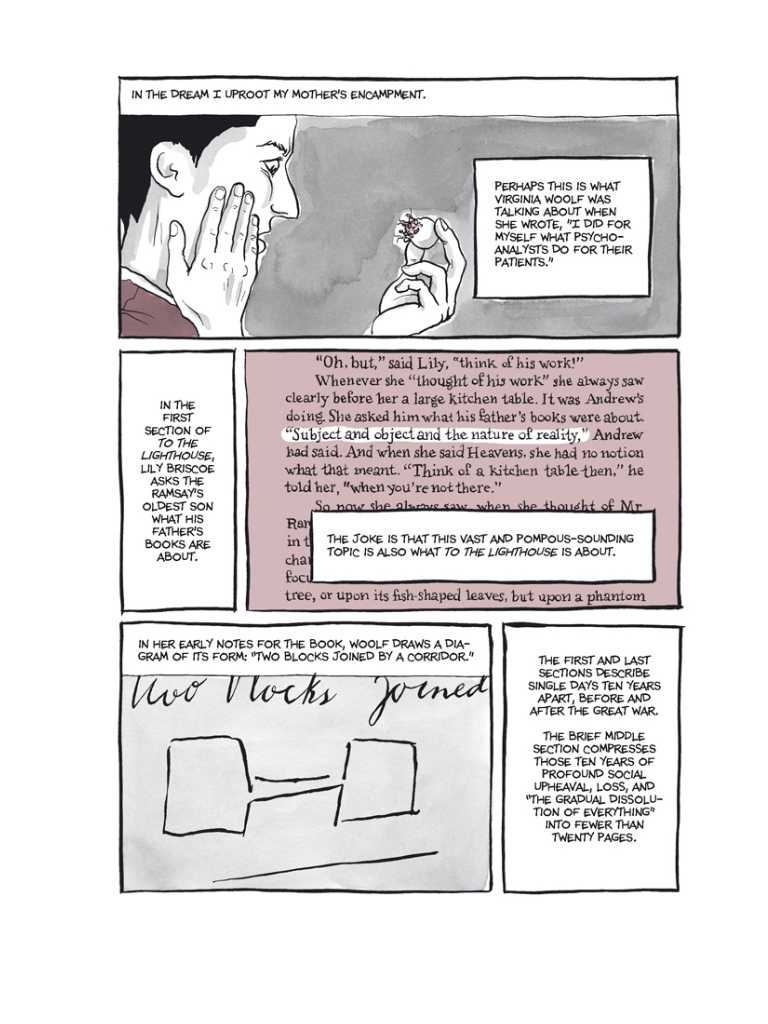
In Are You My Mother?, the style is heavily repeated – not an easy book to flip through, it is a non-linear maze of sorts – but here the key theme is psychoanalysis. It is structured as deconstruction of seven Alison’s dreams, the discussion of these with a number of analysts/shrinks she goes to, her relations with her mother in light of Fun Home publication – all seen thorough her reading of Freud, Jung and, most importantly, Donald Winnicott, a paediatrician and psychoanalyst she seem to hold in most esteem. Plus, not unexpectedly, Mrs. Virginia Woolf – to my shame, haven’t read a single book of hers – after this one, I know where to start at least. To the Lighthouse.


How to Make Love Like a Porn Star: A Cautionary Tale by Jenna Jameson and Neil Strauss
Posted: June 22, 2012 Filed under: Books, Documentary, Non-fiction | Tags: Books, English, Jenna Jameson, Neil Strauss 1 Comment
Kindle sometimes pushes you (well, me) to read some, ehem, funny stuff, not usually found on my home shelf – like bad girl Jenna’s 2004 autobiography in whopping (as I realized far too late) 600 pages – ghost-written by Neil Strauss, whose book with Marilyn Manson has been on my shelves for years (unread to this date – mommy, promise, I will read it someday).
This book, in spite of a suggesting and rather provocative title, is in fact a Cinderella story in the adult world – well, adult in you-know-what-I-mean sense ;-)) Far too many bad things happened to poor Mrs. JJ – or so she claims – but you need at least a few big bad wolves for the Red Riding Hood to pass through the woods and find her way home, to her darling porn-director-turned-second-husband prince. Well, after one porn-director-failed-first-husband folly and quite a few non-husband ones.
And in the end, “rags to riches” is spun as porn starlet to “porn CEO”, as she proudly calls herself. Oh well.
I’ve never told anyone about either the Montana experience or the one with the Preacher [no mires’ note: rapes in her teens] because I don’t want to be thought of as a victim. I want to be judged by who I am as a person, not by what happened to me. In fact, all the bad things only contributed to my confidence and sense of self, because I survived them and became a better and stronger person for it.
The Accidental Investment Banker by Jonathan A. Knee
Posted: June 13, 2012 Filed under: Books, Documentary, Non-fiction | Tags: Books, English, Investment Banking, Jonathan A. Knee, Michael Lewis 1 Comment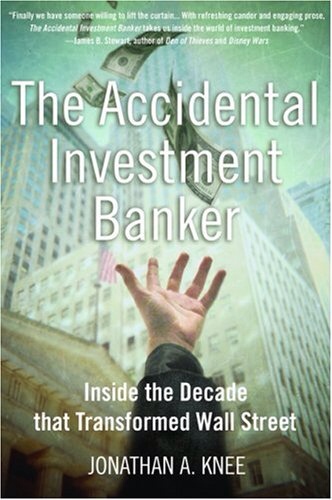
The Accidental Investment Banker: Inside the Decade that Transformed Wall Street turned out to be a book I would strongly recommend all junior bankers to read. And senior bankers. And clients – umm, maybe.
A dear old friend and revered former boss ZS suggested it to me back in November 2007 in London, during a roadshow, at the height of the IPO craze – back in the good old times, as now they are called in bankers lingo.
Not as sensational as House of Lies – an image-shattering tv show about consulting powerhouses, especially in the eyes of less sophisticated Russian clients – but quite educational indeed for those not too familiar with the i-banking industry.
The fact that it is not as funny and as politically incorrect as Liar’s Poker or Monkey Business, both of which tended to hyperbolize trading floor and i-banking paranoias respectively, is a strong plus. This book, written a couple of years ahead of the Too Big To Fail drama, gives a much more balanced and candid view of what banking was and what it evolved into. All the conflicts of interest, hidden agenda, internal politics, tricks and treats of the trade, sugar and spice and all things nice, you name it.
In total, it has been one of the most gripping reads recently. Get a copy indeed.
Some bankers were famous for getting revenue credit for a wide range of transactions to which their connection was obscure at best. Referred to internally as “velcro bankers,” because they would stick their name on any deal in the general vicinity, it was said that they engaged in “hoverage” rather than “coverage” of accounts. These bankers consistently managed to get revenue credit on deals even where there they would fail my own “police- lineup” test for awarding secondary revenues: if the client could pick the banker out of a police lineup, he gets secondary credit.
 nomiresdebajodelacama