La Aventura del Tocador de Señoras by Eduardo Mendoza
Posted: July 19, 2013 Filed under: Books, Fiction | Tags: Books, Eduardo Mendoza, Spanish Leave a comment
As expected, a perfect vacation read in mid-July, un libro verdaderamente veraniego.
La Aventura is the third book in Mendoza's well-known crazy detective series – and I like each installment more and more. El Laberinto de Las Aceitunas was definitely better than La Cripta Embrujada – and El Tocador, better than El Laberinto (though, to say the truth, while I remember La Cripta's story a little bit, I can recollect Las Aceitunas jackshit).
In a nutshell, this one particular murder story is a typical Spanish/French/whatever comedy of stupid situations – and narrated by its nameless protagonist, who is finally out of the mental institution that he had to run from investigating stuff in installments 1 and 2.
As a rather serious writer, Mendoza publishes one such piece of funny pulp a decade or so, as a pinch of sugar to his more serious novels – and, surprise-surprise, its fourth volume was out recently. Shall I indulge myself? More sugar, spice and everything nice? Umm
The 4-Hour Workweek by Tim Ferriss
Posted: July 14, 2013 Filed under: Books, Non-fiction | Tags: Books, English, Tim Ferriss 2 Comments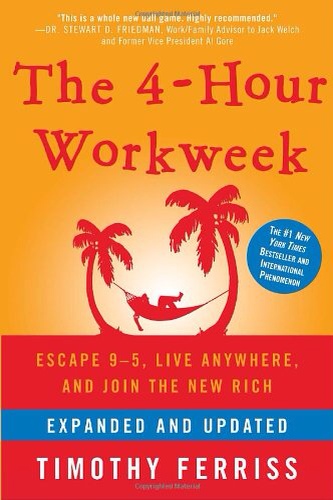
Tim Ferriss has been, in a sense, a life-changer in the past 6 months. I gave away 14 kilos in 4 months on his diet (though I am taking a short break from it on my 2 weeks off, gaining kilos now, as sometimes you want a proper vacation) – and man, I am positively surprised about how much this simple 4HWW book has made me think.
The practical advice he gives is nothing new, and sadly, it is not easily compatible with an advisor career – but big picture-wise, it strikes a chord. The guy is great. Clear clean-cut thinking. Checks all the right boxes: eustress, no W4W, income automation, liberation, mini-retirement, travel, languages.
No, I'm not going to say much. I need to pause and think. I need to find my muse. Or muses, plural. Roger out.
“But, you don't understand my situation. It's complicated!” But is it really? Don't confuse the complex with the difficult. Most situations are simple – many are just emotionally difficult to act upon. The problem and the solution are usually obvious and simple. It's not that you don't know what to do. Of course you do. You are just terrified that you might end up worse off than you are now. I'll tell you right now: If you're at this point, you won't be worse off.
Skagboys by Irvine Welsh
Posted: June 29, 2013 Filed under: Books, Fiction | Tags: Books, English, Irvine Welsh Leave a comment
To make it clear, Skagboys is a rather lengthy 550-page long prequel to Trainspotting, published some 20 years or so after the original hit the shelves and corrupted the minds of millions – and given the fact that Porno, a 2002 sequel to the same Rents/Sick Boy/Begbie routine was so-and-so (I couldn't read it, so I just listened to a shortened audiobook instead), hopes were not too high.
Despite being a little bit slow at the beginning (I tried to start reading it three times, and only the 3rd attempt got me past Chapter 1), the book caught up with me somewhat later, and got me pretty much immersed in it till the very end.
My call – the absolute peak of the novel is a chapter called Chute, a standalone story about Nicksy, rather a secondary character than the main crew, a brilliant piece of literature in its own right – brutal, raw, jaw twisting, gripping, and showing that grandpa Irvine hasn't lost his form yet. After such intensity through, a comedown was imminent – and there was a prolonged, I'd say, even dragging pace-killer of Renton's 100-page rehab diary.
The very end of the book was a tiny bit disappointing, as with all my love and devotion to Welsh, I didn't like at all his poorly hidden winks and nods at the T-novel and the T-movie – had a lame taste, if you ask me – but nah, what can you do in a prequel.
Overall, hard as it seems to believe, I still adore these dirty, incorrect, abusive, and violent crime/sex/addiction stories of Leith's troubled youth – and probably not to a lesser extent than when I first read them, after I'd bought a copy of Ecstasy in 1996 in the old Zwemmer's bookstore on Kuznetsky, once I had found out about Mr. W's world in Птюч magazine. Oh well, these days are long gone.
If you don't wanna read the whole of Skagboys – well, read just Chute, it's awesome.
The Juliette Society by Sasha Grey
Posted: June 2, 2013 Filed under: Books, Fiction | Tags: Books, English, Sasha Grey Leave a comment
Reading a couple of articles about Sasha Grey's recent visit to Russia and her support for Pussy Riot (though with Sasha Grey, it's a pun of words in itself), I realized Ms. Grey has just published a book – and, surprise, surprise – not a typical autobiography describing hard youth and then a working gal's sweaty days in the trade, but a full fledged fiction novel. Wow. So I've tricked amazon into believing I am now living in London (typically, they think I'm in the US, but the US edition isn't out yet), bought a copy for 4 quid and started reading. (Even put down Skagboys that I am reading now on a quick hold.)
Well, after reading a number of website reviews, I was expecting an erotic novel of sorts, a fifty shades, the Story of O or so kinda thing, but written by a much more experienced girl. (BTW, I still haven't read Pauline Reage – and for sure I haven't read E.L. James, as 50 million housewives couldn't get it wrong, if you get my drift – this book is forever off limits.)
Kindle says 100%, and I have three topics to mention.
First, sex – I would've been surprised if there wasn't a pinch of it. I guess Mr. Kubrick changed the perspective on sexual fantasies for quite a few people with that Tom Cruise movie, huh, Sasha inclusive. To my mind though, this book ain't so erotic – graphic sometimes, maybe, but not erotic, as Sasha is way too reflexive and not so straightforward.
Second, a big theme in the novel is Sasha's big screen aspiration, love for the non-porn celluloid, and her movie student career. Her numerous references to a few great films of the past are too simple and plain for my taste, far from the undeniable truths and insight of the Bambi book by the revered David Mamet, and nowhere near the rage with which Pat Bateman talks about Phil Collins's music, but still quite fun, especially given Sasha's very own cinematic past.
And, third, the end of it had a little bit of Kill List aftertaste – but just a tiny whiny bit. And all too predictable. Anyway, no spoilers!
Overall, a very quick read – and don't forget, that ain't a fake E.L. James story, that's Sasha Grey – and she must know her shit on the subject )))) Not even close to Venus in Furs, probably the greatest erotic obsessions novel I have read, but still, a decent try.
Plot is always subservient to character. Always, always, always and without fail. […] Just as an aside, there is one type of movie, and only one, that doesn't conform. One genre that flagrantly breaks the rule. Not only breaks it, but turns it on its head, just because it can, and it doesn't give a fuck: the porn movie. But let's not go there.
La Hora Sin Sombra by Osvaldo Soriano
Posted: May 26, 2013 Filed under: Books, Fiction | Tags: Books, Osvaldo Soriano, Spanish 13 Comments
Osvaldo Soriano is (well, was) a great Argentinian author. Bought No Habrá Más Penas ni Olvido by its cover in El Calafate and was amazed. That one and Cuarteles de Invierno are both definitely among the best books I have ever read in Spanish. Maybe in all languages. Sharp, agressive, you get glued to the pages and simply can't put the book down. There are English and Russian translations out, it's a must-read one.
But don't, please, don't believe the people who say his last novel La Hora Sin Sombra (1995) is probably his best. It is not. Or maybe it is, I don't know, if you're much older than me. 36% down the road (kindle stats are meticulous), I just can't read it anymore. The life of his father (fictitious, not real) is something I get more and more bored after each page. No central theme, no storyline, no style that I like.
I keep on telling myself I have to learn putting down and abandoning books I don't like. Here's a great chance to practice this art.
Moth City Season 1 by Tim Gibson
Posted: May 23, 2013 Filed under: Books, Comic | Tags: Books, English, Tim Gibson Leave a comment
Interestingly, Moth City is probably the first comic book written specifically for iPad (or Kindle Fire, if that is your choice). It is impossible to print it in full on paper. Each action panel represents a new page in the file, thus creating a unique movie like feeling while reading it. And no need for panel guided view technology of Kindle App or comiXology, as all pages, panels, text balloons etc, all fit iPad screen nicely without any zooming. The future of comic books, yeah.
The story is in the early stages of development, so hard to comment on its quality – overall, it's a noir setting in a ficticious Asian city in the 30s, action and adventure, huh. The drawing style I can judge already – it looks great.
Total score: even though I do not like reading serialized comic books as they come out, usually once a month or so (other than The Walking Dead – but man, I am tired of it, I keep forgetting previous episodes every month), this particular one is probably worth picking up and trying.


The Walking Dead #110 by Robert Kirkman et al
Posted: May 18, 2013 Filed under: Books, Comic | Tags: Books, English, Robert Kirkman, Zombie Leave a comment
Reading it volume by volume, 25 pages each per month, is total waste. Should I go back to at least semi-annual 6-volumes-a-piece books?
Человек с рублем Михаила Ходорковского и Леонида Невзлина
Posted: May 8, 2013 Filed under: Books, Non-fiction | Tags: Ayn Rand, Books, Leonid Nevzlin, Mikhail Khodorkovsky, Ron Paul, Russian Leave a comment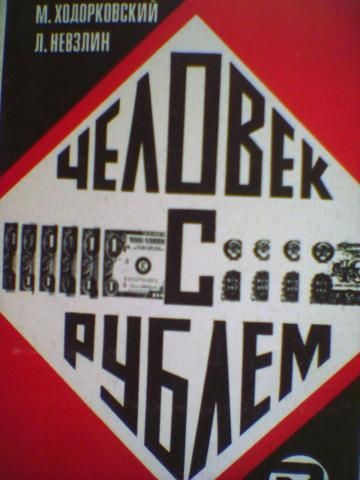
Это, конечно, книга крушения надежд и идеалов.
Узнал я про ее существование (запоздал на 20 лет, надо сказать) из совместного труда МБХ и Натальи Геворкян про тяжелую судьбу главного опального олигарха родины, а также мысли его о судьбах Рассеи. Тяжелые мысли однако.
Как вы, наверное, догадываетесь, купить такой труд сейчас ну просто невозможно, поэтому я его, хм, ну вы понимаете.
Ох, дурно мне, дурно. Как бы так вкратце-то сказать? Нагорная проповедь одних из главных нэпманов начала 90-х, вот.
С одной стороны, за редкими исключениями, с идеологической стороны этой книжке позавидует Алиса Розенбаум и Рон Пол. Ибо оба 30-тилетих товарища мнят себя всей троицей учеников доктора Akston'a в одном лице, со всеми вытекающими отсюда. Libertarian 101, и не помогут не пожарные, ни милиция. Книжка идеологически чистых лозунгов, которые можно разобрать на цитаты – причем от нынешних Facebook libertarian feeds она не отличается ничем, включая даже gun ownership support.
Не согласен я только с их подходом к религии – но и он-то обоснован только тем, что вон СССР был против – ну а мы, значит, мы “за”. В общем, в терминах Miscrosoft, евангелисты капитализма прямо-таки.
С другой, а особенно после прочтения Тюрьмы и воли, этот труд вызывает легкую депрессию. Во-первых, потому что сам МБХ (про Невзлина не знаю) в последние 10 лет занял строго противоположный, я бы сказал, левацкий вектор – был бы на воле, место ему на Occupy Wall St, а не в списке Форбс. Ну а во-вторых, вся наша жизнь за эти двадцать лет так поменялась (сложно сказать, к какому – наверное, не совсем к худшему), что идеалы эти, кажется, стали еще дальше, чем были. А неплохие идеалы, в основном.
Ну и напоследок – она, конечно, чудовищно и непоправимо морально устарела. Все эти цитаты из советских книжек в кавычках, список источников, анекдоты из армянского радио – это все сейчас вызывает прямо-таки неконтролируемое умиление. Необязательно было ее читать от корки до корки, но вот, за четыре месяца набегами осилил-таки.
Цитат отметил так много в kindle, что даже не знаю, что бы такое сюда добавить. Добавлю пару веселых фраз – друзья-банкиры поймут.
Мы были бы никуда негодными банкирами, если бы интересовались паспортными данными, анкетами и источником финансового благополучия наших вкладчиков. Мы – учреждение сугубо коммерческое, а не сыскное, дознавателями как не были, так и не будем. Мы платим налоги, которые идут и на содержание правоохранительных органов. Их функции – ловить преступников, готовить доказательства для суда, решение которого о конфискации того или иного вклада имеет силу закона.
Какая разница между нами и Сбербанком? Сила Сбербанка в печатном станке, наша – в недвижимости, которая является залогом того, что мы не обманем своих акционеров.
“У нас, – писала та же “Неделя”, – как-то замалчивалось, что в минувшее десятилетие в Штатах прижился лозунг “жадность – это прекрасно!” Поощряется страсть к деньгам, накопительству, дух соперничества – у кого на счету больше. С нашей, пуританской точки зрения, пропаганда жадности не очень приветствуется. Отбросим в сторону нравственность, зайдем с другой стороны: именно стремление жить в полном соответствии с этим лозунгом стимулировало взлет экономики, рост общественного и личного богатства. От лозунга – выгода, он себя полностью окупил – значит, по мнению деловой Америки, он полностью себя оправдал, следовательно, он морален.
И все-таки одно издание мы выделили бы особо, думаем, оно бы победило на конкурсе “Книга десятилетия”. Жаль, что у него мизерный тираж, всего четыреста тысяч.
El Laberinto de las Aceitunas by Eduardo Mendoza
Posted: May 4, 2013 Filed under: Books, Fiction | Tags: Books, Eduardo Mendoza, Spanish 2 Comments
Given that I am offcially on vacation this week, I've decided to pay a quick visit to a relatively unknown territory (well, at least for me) of literatura ligera.
Eduardo Mendoza is definitely a borderline kind of author on the subject, with some of his novels competing to run for la selección española de las obras maestras contemporáneas, including his most recent Riña de Gatos: Madrid 1936.
On the adventurist side, apart from his excellent Sin Noticias de Gurb alien comedy, his most prominent light series is a collection of several novels about an unnamed detective loco. While for the year or so I was contemplating whether to read installment #2, first published in 1982, about the olives labyrinth (not present in the novel, by the way – as compared to the actual crypta in installment #1), Mendoza came up with his fourth one last year.
I guess the most common feature of the two novels in the series I've had so far – while they are absolute fun to read, it seems Mendoza never knows how to finish them properly, and in the last 20% of the book (as kindle kindly and precisely indicates) things take the most strange turns and typically end nowhere. But I guess that matters un pimiento – in Mendoza's easy fiction, the process of reading (ie partcipating) is much more than the result itself. Truly Olympic spirit, huh. Shall I start the third one now, about el tocador de señoras? Hm.
Street Smarts by Jim Rogers
Posted: April 28, 2013 Filed under: Books, Non-fiction | Tags: Books, English, Jim Rogers, Ron Paul Leave a comment
Loved it. Thoughtful, full of life and market insight, and good humor. I haven't read Rogers' previous books – maybe I will now – but for me, apart from the free markets libertarian background (most quite in line with Ron Paul, I would say), it made me think about children.
Rogers' bold move of moving his family to Singapore and putting his daughters to study Mandarin practically from birth makes you think whether English classes for your two year old are enough. Shall I put my children to study Mandarin as well? Hm.
Another thing – as a true value investor, he keeps thinking of how to invest in Myanmar and North Korea. In that discussion, he mentions Cuban real estate in a short paragraph. Given my well known love for La Isla de Libertad, and my bet that they will let the US in this or next decade latest, should I buy a piso or casa there? Puzzled and thinking. Hm.
If you were smart at the start of the nineteenth century, you made your way to London. If you were smart at the start of the twentieth, you packed up and moved to New York. If you are smart at the start of the twenty-first, you will find your way to Asia
They wanted to do what I did, they told me, and asked me what they should be studying. Study philosophy, I said, study history. No, no, no, they said, they wanted to work in the City; they wanted to be rich. If that were the case, I answered, they should stay away from the City, because it would soon be a backwater again. Finance is over, I told them. Study agriculture instead. If they wanted to be rich, I advised, they should all become farmers.
When governments run out of money, they do not stop spending. It was no different two thousand years ago than it is today. Politicians know no bounds. If Rome was running out of silver, if its economy was being mismanaged and it was running trade deficits, the only way to keep the good times rolling was to create more money. Think of Ben Bernanke in a toga. Adulterate the coinage, crank up the printing press – only the technology changes. Governments keep running out of money, and as long as that happens, bureaucrats and politicians will keep coming up with ways to create it.
“Those who would give up essential liberty to purchase a little temporary safety”, said Benjamin Franklin, “deserve neither liberty nor safety.”
 nomiresdebajodelacama