Logicomix. An Epic Search for Truth by Apostolos Doxiadis, Christos H. Papadimitriou, Alecos Papadatos and Annie Di Donna
Posted: November 24, 2014 Filed under: Comic, Fiction, Non-fiction | Tags: Alecos Papadatos, Annie Di Donna, Apostolos Doxiadis, Bertrand Russell, Christos H. Papadimitriou, Comic, English, Logic, Philosophy Leave a comment
An extremely difficult comic book, probably the most difficult graphic novel I've read so far. It couldn't have been otherwise, as it is a partly fictitionalized story of Bertrand Russell's life, work and his path in the field of modern philosophy and mathematics.
To a dumb person like me, going through logical paradoxes and mathematical concepts was tiresome and ultra calorie burning even via this “easy” medium of a graphic novel – so I dread the very thought of trying to read Russell's or his fellow Wittgenstein's stuff in full.
Still, I suggest to all comic book lovers, as well as those who never read comic books, to try it. It's something of a kind, a history of modern philosophy in the first half of the XX-th century, presented in witty colored pictures. Not Tintin's adventures, but still.
All You Need is Kill aka Edge of Tomorrow by Hiroshi Sakurazaka
Posted: November 17, 2014 Filed under: Books, Fiction | Tags: Books, Edge of Tomorrow, Emily Blunt, English, fiction, Hiroshi Sakurazaka, Live. Die. Repeat, Science Fiction, Tom Cruise Leave a comment
Coincedences happen. Silly enough – watched the movie on Friday – and on this very Saturday morning stumbled upon the original book translated into English. Hm, must be a sign.
By the look and feel of the movie, I sensed it would have the Heinlein's Troopers touch to it – and the book, even more so.
Now, with less than 200 pages and a rabid pace, I can't but realize it's much more Verhoeven's.
Anyways, that bug queen sci-fi was dear to my mind, and I ate the book in a blink of an eye. Ay, yummy. Feels like I'm twelve again. Hope my son catches that affection a few years down the road.
Blue is the Warmest Color by Julie Maroh
Posted: November 15, 2014 Filed under: Comic, Fiction | Tags: Abdellatif Kechiche, Blue is the Warmest Colour, Books, Comic, English, French, Gay, Julie Maroh, La vie d'Adèle Leave a comment
Her name was not Adèle, her name was Clementine. Julie Maroh’s original book cuts like a knife, same shapness and quality as Kechiche’s award winning 3-hour masterpiece. Makes your heart beat and ache.
If you’re not homophobic, if you didn’t watch the flick only for the very long scene and nothing else, well, you may wanna give it a shot.
It’s no less touching, it’s no less beautiful – though, granted, it’s a notch more melodramatic at the end (as the film ends quite differently) – but it’s a master’s work nonetheless, beautiful and complete.
When I read that, I thought of Pliura and his only book of poems. It seems that gay people, probably due to harassment and bullying, came up with a few very touching literature and movie gems in the past several decades, Romeo and Juliette of the 21st century kinda thing.
I can’t recommend it though, as it probably breaks Russia’s new homophobic laws that prohibit promotion of anything gay related, good god forbid, no no no, don’t read it and don’t buy this book – but why listen to me, you should ask yourselves, if you can make up your mind on your own.
PS: … and my good companions to this jewel were Cohiba Siglo I and a bottle of Barolo 2008. These two I can easily recommend.


Coward. A Criminal edition by Eb Brubaker and Sean Philips
Posted: September 14, 2014 Filed under: Comic, Fiction | Tags: Books, Comic, Crime Fiction, Criminal, Ed Brubaker, English, Sean Phillips 1 Comment
A glossy two-book hardcover collection of all six Criminal volumes was the reason I decided to re-read volume one Coward again. Actually, on my second try it felt much better than when I first had read it. Actually, I would even say I quite liked it. Is it a consequence of volume six? Hmm, looks like I am getting older and dumber.
P.S. And now I quietly wait for the movie.

Fatale. Book Five: Curse the Demon by Ed Brubaker and Sean Phillips
Posted: September 14, 2014 Filed under: Comic, Fiction | Tags: Books, Comic, Ed Brubaker, English, Fatale, Horror, Sean Phillips Leave a comment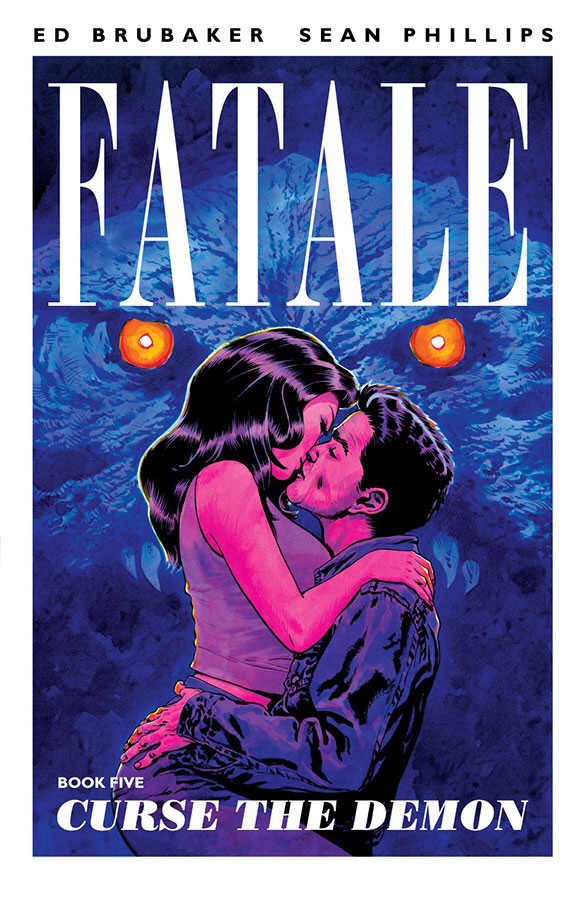
The last book of Fatale franchise. A decent read, though, I guess, I got tired of it a bit already – like TV shows, the series fatigue finally catches up with you.
Still, when they make a movie, I will be the first to watch it.
Anders, Molussien by Nicholas Rey and Gunther Anders
Posted: August 31, 2014 Filed under: Books, Cinema, Fiction | Tags: Books, Cinema, English, French, German, Gunther Anders, Nicholas Rey Leave a comment
This is a post about a book that I have not read. About a movie the director of which made it on the back of the book which he himself had not read. Die Molussische Katakombe by Gunther Anders. Written in the 1930s in Hitler's Germany, it managed to escaped the purge – and was first published in the 1990s, the year Anders died. In German. No Russian, English, Spanish translations I could find. Damn.
Rather than writing about this tiny 16mm film gem myself, here's a link to director Nicholas Rey website and his interview about the movie. Or read Cinema Scope essay about it.
How do I get a Russian or English translation? Puzzled.
======
“Shortly before the Burrusian revolution,” Olo explained, “the impoverished young bourgeois of Molussia and the most miserable of the pariah, who hadn't had a job in years, took off because they had Burru's explicit authorisation to find his enemies, beat them, and kill them. But while they felt a general hatred, none of them would have been able to explain why this or that particular man should be their enemy.But when they started beating, their hatred became more definite. No one can beat someone without screaming. While they were beating them up they called their victims the most terrible names. They called them murderers, thieves, usurers, whatever came to their minds. As soon as the names passed their lips, they started to believe them. They continued the beatings because it were murderers, thieves, and usurers which they brutalized. But their hatred became even more definite when the victims fought back. Because when two parties fight each other, enmity is beyond all doubt. After Burru had allowed his people ten bloody days there was no need for a revolution anymore. Because his enemies now were theirs. 'In combat,' one of Burru's secret edicts reads, 'one recognises enmity, enmity comes in killing.' Learn that.”
“As what am I supposed to learn it?”, asked Yegussa.
“As the most profound wisdom of wickedness,” answered Olo.
Amerika by Réal Godbout
Posted: July 13, 2014 Filed under: Comic, Fiction | Tags: Books, Comic, English, Franz Kafka, Réal Godbout Leave a comment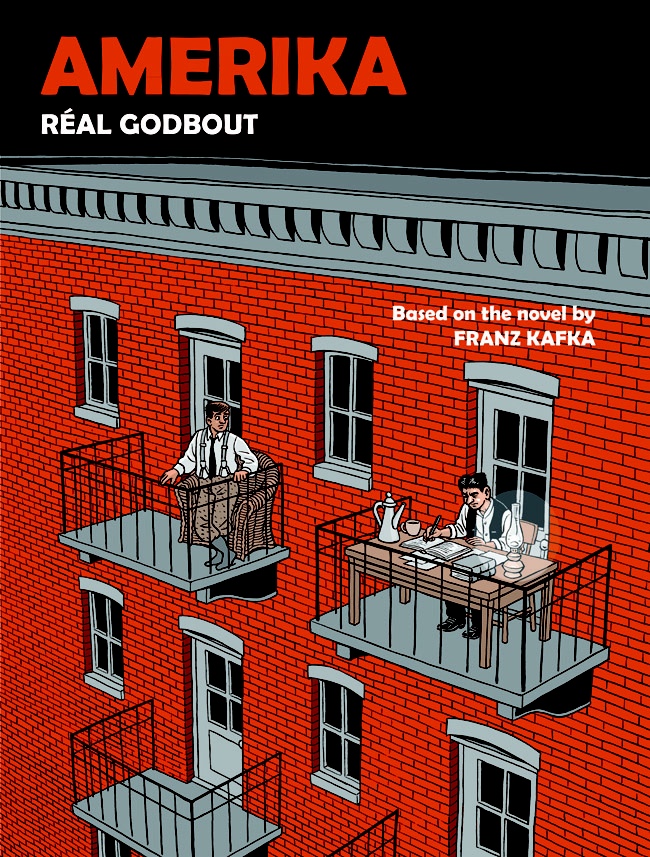
I haven't read Kafka's unfinished novel, so hard for me to judge how close it is to the original, but this adaptation as a standalone book is a very nice funny read. In a sense, it reminded me of Eduardo Mendoza's numerous novels from the past three decades, not only the mad detective ones, but even more serious – which are also full of unexpected story twists and adventures.
Me likes.
Sleepwalk and other stories by Adrian Tomine
Posted: July 6, 2014 Filed under: Comic, Fiction | Tags: Adrian Tomine, Books, Comic, English Leave a comment
Adrian Tomine's Sleepwalk is nearly perfect. A hundred page long collection of a dozen stories, that look and read like pages torn out of people's diaries, written for the owner's own exclusive use. Lonely, insecure, sad, they are touchingly real.
Given that I exceeded my memory's capacity for remembering the content of books and movies long time ago (a clear consequence of rabid consumption of both – and one of the reasons of this blog), from his main books Shortcomings and Summer Blonde I remember almost none. But I have flash memories that I loved them long time ago – and I did love this one.
Given Tomine's indie storylines, it's difficult to cut a part of a story as an example – so I decided I place here this one pager story called Drop – which is less typical for Tomine, but is quite interesting nonetheless, especially for the size of it.

Incidents in the Night Vol. 1 by David B.
Posted: July 2, 2014 Filed under: Comic, Fiction | Tags: Books, Comic, David B., English Leave a comment
Incidents in the Night left me unimpressed. I have so little to say about it (though it's supposedly literary, multi-layer, sophisticated, blah-blah-blah), that I'd rather keep it shut this time.
Flash Boys: a Wall Street Revolt by Michael Lewis
Posted: June 23, 2014 Filed under: Books, Non-fiction | Tags: Books, English, Michael Lewis Leave a comment
Mike Lewis‘s latest book on the high frequency traders and their need for speed and presumed market abuse left me bored. Maybe I understand too little on the subject, maybe I care too little about robots taking advantage of nanoseconds, hard to say.
Would I recommend it? Naw, other Lewis’s books like Boomerang or The Big Short (or Liar’s Poker!) are much, much better.
But my ultimate gut feel – he understood too little and trusted too much those folks who agreed and wanted to talk to him.
Oh well, in a microsecond, this book, gone.
 nomiresdebajodelacama